
The claim ishalf the job
Your first cheque is smaller than the estimate and nobody explained why. There is more money sitting with your carrier, and it is released by paperwork most homeowners are never told about. This page explains all of it — then we do it with you.
Why your first cheque looks too small
It is not an error and it is not the whole payout. Here is the arithmetic your carrier is doing.
RCV = ACV + recoverable depreciation
Replacement Cost Value
What it costs to replace the roof at today's prices. This is the number the carrier recognises as the value of the work.
Actual Cash Value
RCV minus depreciation for the age and wear of the old roof. This is the first cheque you receive — and why it looks too small.
Your deductible
The carrier subtracts it from that first payment. It is yours to pay. No legitimate contractor can absorb it, and an offer to 'waive' or 'eat' your deductible should end the conversation.
Recoverable depreciation
The difference between RCV and ACV. The carrier holds it until the work is finished and a signed Certificate of Completion is submitted. A great many homeowners never claim it, because nobody told them it existed.
The short version: the recoverable depreciation is real money that is already yours, sitting with the carrier, waiting on a signed Certificate of Completion. If nobody submits one, it stays there.
Four phases, start to paid
This is the same sequence our own system tracks internally, written out for the person it is happening to.
Filing
Getting the claim open, with the damage already documented before anyone from the carrier sees the roof.
- We inspect the roof and photograph and measure the damage
- You file the claim with your carrier and they issue a claim number
- The date of loss is established — the policy in force that day is the one that pays
Adjustment
Where the amount is decided. This is the phase most homeowners are left to handle alone, and the one that decides the size of the cheque.
- The carrier assigns an adjuster
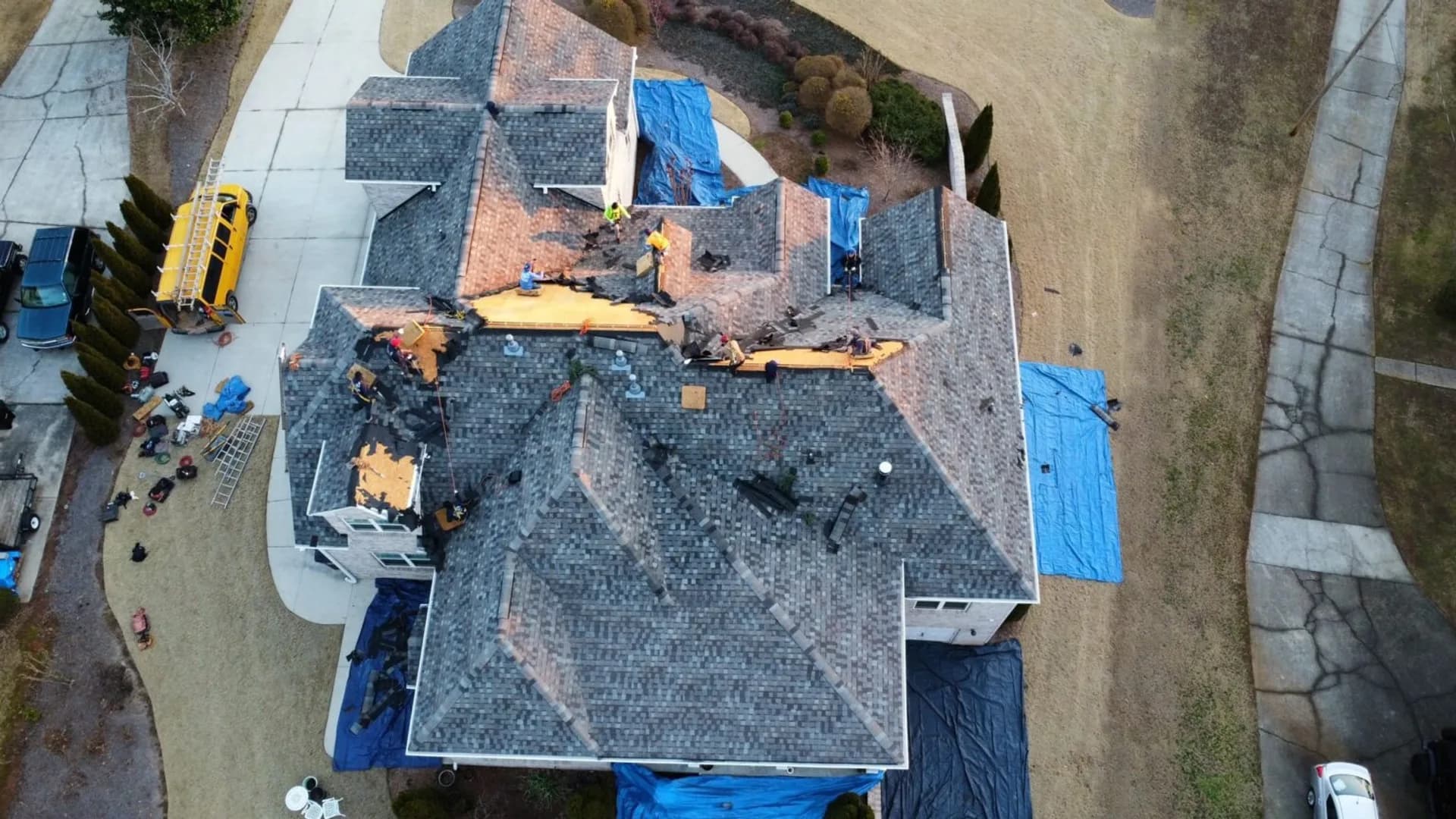
- The adjuster inspects — and we are on the roof with them, walking the same damage
- The carrier issues a loss summary with RCV, ACV, deductible and depreciation
- We file supplements for anything the first scope missed — code-required ice and water shield, ventilation
- Scope and amount are agreed, and only then do you sign a contract
Production
The work itself, documented as it goes because the last payment depends on proving it happened.
- Work is scheduled and materials ordered
- The roof is replaced and we walk it with you
- A signed Certificate of Completion goes to the carrier
Payment
The part that gets abandoned. The Certificate of Completion is the trigger that releases the money the carrier has been holding.
- The carrier releases the recoverable depreciation
- Everything is collected and the claim closes
The words on your paperwork
Carriers write these as if everyone already knows them. Nobody does the first time.
- Carrier
- Your insurance company. The one that holds the policy and writes the cheques.
- Date of loss
- The day the damage happened — the storm or the hail. It matters because the policy in force that day is the one that pays.
- Adjuster
- The carrier's inspector. They decide what is covered and how much. They work for the carrier, not for you, which is why it is worth having someone on the roof with them.
- RCV — Replacement Cost Value
- The full cost of replacing the roof at today's prices.
- ACV — Actual Cash Value
- RCV minus depreciation for age and wear. Your first cheque is based on this, which is why it is smaller than the estimate.
- Deductible
- Your share, subtracted by the carrier from the first payment. It cannot legitimately be absorbed by a contractor.
- Recoverable depreciation
- The gap between ACV and RCV, held back by the carrier until the work is done and documented. This is the money people leave behind.
- Supplement
- A request to the carrier for work the original scope missed — code-required upgrades, ventilation, hidden decking damage. Extremely common, and each one is approved or denied on its own.
- Certificate of Completion
- The signed document proving the work is finished. It is what releases the recoverable depreciation.
Five ways money gets left behind
None of these are unusual. All of them are avoidable if somebody tells you in time.
Taking the first cheque as the whole payout
The ACV payment is a first instalment, not a settlement. The recoverable depreciation is a separate cheque that only arrives if somebody asks for it with the right paperwork.
Letting the adjuster inspect alone
The adjuster is thorough about what they see. Damage they do not see does not go in the scope, and the scope is the money.
Signing a contract before the scope is agreed
Sign after the carrier and the contractor agree what the job is. Otherwise you are committed to work whose funding is still an open question.
Never filing a supplement
First scopes routinely miss code-required items. Those are not extras you are asking for — they are work the job legally requires.
Hiring whoever knocked first after the storm
Storm-chasing crews follow weather across state lines. When the warranty question comes up in three years, look for who is still in Albany.
If a contractor offers to cover your deductible, that is not a discount. It is a proposal to misrepresent the cost of the work to your insurer, and you are the one on the policy.
Who does what
Your list is short on purpose. A few things only the policyholder can do — the rest is ours.
What you do
- Call your carrier to open the claim — it has to be the policyholder
- Give us the claim number and adjuster details when they arrive
- Be home for the adjuster visit if you can
- Pay your deductible
- Sign the contract once the scope is agreed
What we do
- Inspect and document the damage before anyone files anything
- Build the photographic and written damage report the carrier expects
- Meet the adjuster on the roof and walk the damage with them
- File supplements for anything the first scope missed
- Do the work, and document it as it goes
- Submit the Certificate of Completion and chase the depreciation release
What homeowners ask us about claims
Including the two questions people are least comfortable asking out loud.
Storm and hail damage is usually treated as an act of nature rather than something you caused, and carriers handle those differently from at-fault claims. How your own premium is affected depends on your carrier and your history — ask them directly before you file, and do not let anyone, including us, tell you the answer for your policy.
Because it is based on Actual Cash Value — the replacement cost minus depreciation for the age of the old roof — and your deductible comes out of it. The rest is recoverable depreciation, which the carrier holds until the work is finished and a Certificate of Completion is submitted.
No, and neither can anyone else legitimately. The deductible is your share under the policy, and a contractor who offers to absorb it is proposing something that puts you at risk as well as them. If you hear that offer, it tells you what you need to know about the company making it.
Policies set their own deadlines and they vary, so check yours — but the practical answer is sooner than you think. Damage gets harder to attribute to a specific storm as time passes, and that attribution is what the claim rests on.
A denial is not always the end of it. Often the scope was based on what the adjuster saw on one visit, and a supplement with proper documentation changes the picture. We file those routinely.
No. You choose who works on your house. Carriers may suggest a preferred vendor, but the decision is yours.
This page explains how storm damage claims generally work in New York. It is general information, not insurance or legal advice — your policy and your carrier decide what is covered in your case. We are happy to walk through yours on the roof.
Get on the roof beforethe next storm does
Free inspection, a written estimate you can hold us to, and a straight answer about whether this is a repair or a claim.
Free estimates · Same-day service available